
Minqiang Yang
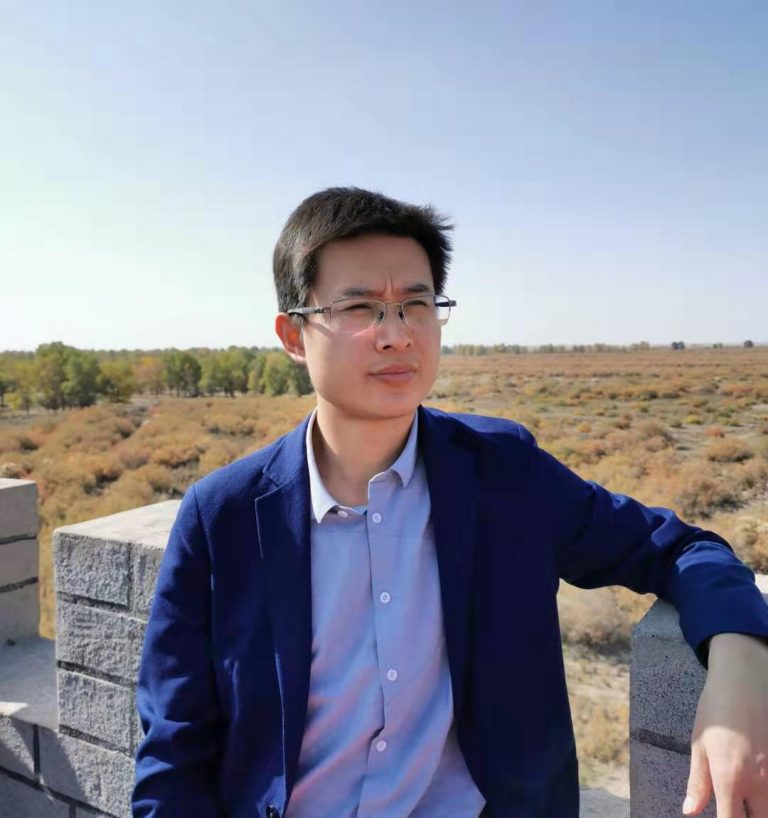
Academic Title: Associate Professor, Doctoral Supervisor
Position: Director of the Department of Data Science and Big Data Technology
Affiliated Institute: Institute of Computer Application Technology
Office Address: Room 312, Feiyun Building
Educational Background
Doctor of Philosophy and Master of Science in Computer Science, Lanzhou University
Bachelor’s Degree, Soochow University
Work Experience
Currently working at the School of Information Science and Engineering, Lanzhou University, engaging in the teaching of data science courses and research on affective computing. Previously worked at Huawei Technologies Co., Ltd. and the Network and Information Center of Lanzhou University, where he was involved in the design and R&D of cloud operating systems, as well as network and big data related projects respectively.
Teaching Activities
Undergraduate Courses Taught: Python Programming, Data Analysis Programming, Data Science Programming, etc.
Graduate Supervision
Has supervised more than 10 postgraduate students, among whom 4 have won the National Scholarship. 4 of the graduated students have proceeded to pursue doctoral degrees, while the others have taken up positions at enterprises and public institutions including Huawei and Meituan, all with outstanding performance.
Research Interests
Affective computing, ubiquitous sensing, and human-computer interaction. The research focuses on the diagnosis, treatment and human-computer interaction of affective disorders based on multimodal behaviors such as facial expressions, eye movements and network behaviors.
Research Projects
Has presided over more than 10 vertical and horizontal projects including the National Natural Science Foundation of China, and participated in 2 National Key R&D Programs.
Publications
Selected representative works (as first author or corresponding author) in the past five years are as follows:
Digital Phenotyping and Feature Extraction on Smartphone Data for Depression Detection[J]. Proceedings of the IEEE, 2025. (Q1, IF=23.2)
Spike Memory Transformer: An Energy-Efficient Model in Distributed Learning Framework for Autonomous Depression Detection[J]. IEEE Internet of Things Journal, 2025. (Q1, IF=8.2)
DepMSTAT: Multimodal spatio-temporal attentional transformer for depression detection[J]. IEEE Transactions on Knowledge and Data Engineering, 2024, 36(7): 2956-2966. (Q1, IF=8.3)
Undisturbed mental state assessment in the 5G era: a case study of depression detection based on facial expressions[J]. IEEE Wireless Communications, 2021, 28(3): 46-53. (Q1, IF=12.9)
Wearable eye-tracking system for synchronized multimodal data acquisition[J]. IEEE Transactions on Circuits and Systems for Video Technology, 2024, 34(6): 5146-5159. (Q1, IF=8.3)
Gaze Patterns in Children With Autism Spectrum Disorder to Emotional Faces: Scanpath and Similarity[J]. IEEE Transactions on Neural Systems and Rehabilitation Engineering, 2024, 32: 865-874. (Q1, IF=4.8)
Aim Where You Look: Eye-Tracking-Based UAV Control Framework for Automatic Target Aiming[J]. IEEE Internet of Things Journal, 2024, 11(12): 21250–21260. (Q1, IF=8.2)
Trial selection tensor canonical correlation analysis (TSTCCA) for depression recognition with facial expression and pupil diameter[J]. IEEE Journal of Biomedical and Health Informatics, 2023. (Q1, IF=7.7)
Three-stream convolutional neural network for depression detection with ocular imaging[J]. IEEE Transactions on Neural Systems and Rehabilitation Engineering, 2023, 31: 4921–4930. (Q1, IF=4.8)
What Can Facial Movements Reveal? Depression Recognition and Analysis Based on Optical Flow Using Bayesian Networks[J]. IEEE Transactions on Neural Systems and Rehabilitation Engineering, 2023, 31: 3459-3468. (Q1, IF=4.8)
Patents and Software Copyrights
Invention Patents
A Depression Assessment System Based on Eye Movements and Facial Expressions, 2023
A Glasses Fitting System and Program, 2022
Utility Model Patents
A Head-Mounted Eye Tracker, 2023
A Wearable Ear-Hook Pupil Acquisition and Gaze Point Prediction Eye Tracker, 2021
Software Copyrights: More than 10 software copyrights including Expression-Based Depression Recognition System, Smartphone-Based Objective Depression Assessment System, and Multimodal Behavioral Phenotype Collection and Assessment Software for Children with Autism Spectrum Disorder.
International Cooperation
The research group maintains good cooperative relationships with The University of Hong Kong, Northwestern University (USA), the Second Xiangya Hospital of Central South University, and Beijing Anding Hospital.
Honors and Awards
Guided students to win nearly 20 awards in national, provincial and university-level competitions
Won the title of Excellent Instructor in competitions such as Gansu Provincial “Challenge Cup”, “Internet +” and “Three Creations Competition”, as well as Excellent Instructor of Lanzhou University Student Innovation and Entrepreneurship Action Plan
MobiHealth 2021 Best Paper Award
IEEE Healthcom 2020 Outstanding Service Award
ACM Outstanding Doctoral Dissertation Award
Second Prize for Teaching Achievements of Lanzhou University
Social Services
Since 2018, has served as the Member of the Program Committee (MC) for the International Conference on Intelligence Science and Big Data Engineering (IScIDE)
Reviewer for journals including ACM Computing Surveys (CSUR), IEEE Transactions on Affective Computing (TAC), IEEE Transactions on Biomedical Engineering (TBE), IEEE Transactions on Computational Social Systems (TCSS), Frontiers in Psychology and Cluster Computing
Member of IEEE, ACM and China Computer Federation (CCF)
Additional Information
Focusing on the research of diagnosis and treatment of affective disorders based on ubiquitous sensor data, in the past five years, he has published more than 20 papers as first author or corresponding author in high-level journals and conferences such as Proceedings of the IEEE (PIEEE), IEEE Transactions on Knowledge and Data Engineering (TKDE), IEEE Transactions on Circuits and Systems for Video Technology (TCSVT), IEEE Journal of Biomedical and Health Informatics (JBHI), IEEE Wireless Communications Magazine (WCM), IEEE Internet of Things Journal (IOTJ), IEEE Transactions on Neural Systems and Rehabilitation Engineering (TNSRE), IEEE Transactions on Computational Social Systems (TCSS), IEEE Transactions on Cybernetics and Social Computing (TCDS) and IEEE International Conference on Bioinformatics and Biomedicine (BIBM). Many papers have been selected as ESI Highly Cited Papers, with the total impact factor exceeding 150. He has obtained 8 authorized national invention patents, and more than 20 utility model patents and software copyrights. He has also won awards such as ACM Outstanding Doctoral Dissertation Award, MobiHealth 2021 Best Paper Award, IEEE 2020 Outstanding Service Award, Second Prize for Teaching Achievements of Lanzhou University, and multiple Excellent Instructor Awards in national professional competitions.
In the past five years, through guiding students to participate in scientific research projects and research training, he has helped undergraduate students publish 7 SCI papers, 2 papers in CCF-recommended journals/conferences, and obtain 4 authorized invention patents. Undergraduate students of our university are welcome to join the research group.
Email: yangmq@lzu.edu.cn