The Frontier Academic Conference on Robust Artificial Intelligence Was Successfully Held at Lanzhou University
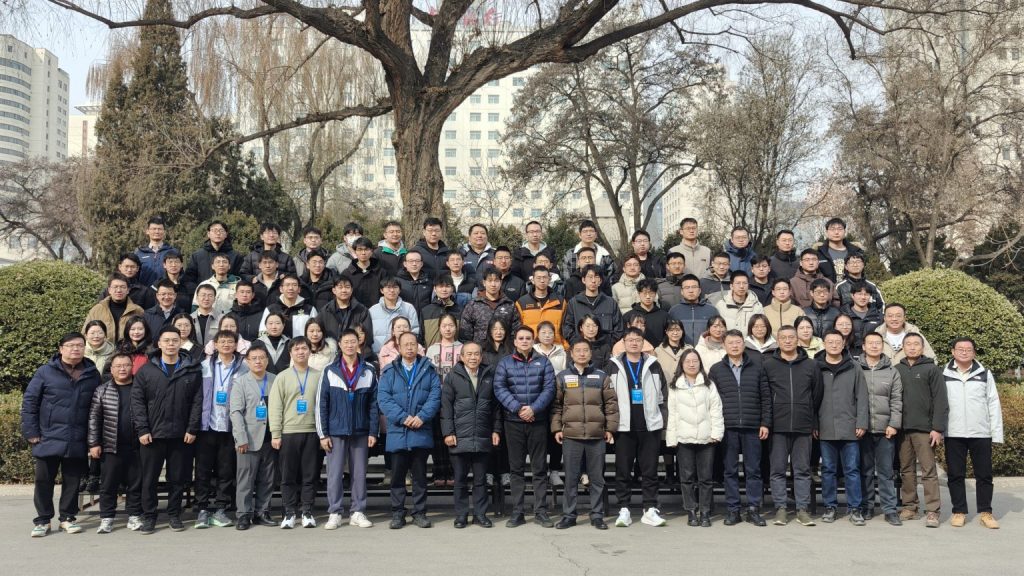
On February 21, 2025, the Frontier Academic Conference on Robust Artificial Intelligence, hosted by the School of Information Science and Engineering of Lanzhou University, concluded successfully in Room 406 of Feiyun Building, Lanzhou University. The conference brought together top scholars at home and abroad to conduct in-depth exchanges on topics such as large-scale foundation models, robust artificial intelligence, and the development of young faculty members. The conference boasted a distinguished lineup of invited guests, including:
- Professor Tat-Seng Chua, Founding Dean and Professor of the School of Computing at the National University of Singapore, and Fellow of the Singapore National Academy of Science
- Dr. Qi Tian, Fellow of the International Eurasian Academy of Sciences, recipient of the National Natural Science Foundation Overseas Outstanding Young Scientist Fund, and Chief Scientist of Huawei Consumer Business Group
- Professor Ke Lü, Distinguished Professor of the University of Chinese Academy of Sciences, Leading Talent of the National High-Level Talent Special Support Program (the “Ten-Thousand Talents Program”), Young and Middle-Aged Leading Talents in Scientific and Technological Innovation under the Ministry of Science and Technology’s Innovative Talent Promotion Program, and Dual-Appointment Professor at the Pengcheng National Laboratory
- Professor Jinhui Tang, Fellow of the International Association for Pattern Recognition, recipient of the National Science Fund for Distinguished Young Scholars, and Dean of the School of Computer Science and Engineering at Nanjing University of Science and Technology
- Professor Weishi Zheng, Vice Dean of the School of Computer Science at Sun Yat-sen University, Director of the Key Laboratory of Machine Intelligence and Advanced Computing of the Ministry of Education, Distinguished Professor of the Changjiang Scholars Program of the Ministry of Education, and Deputy Director of the National Engineering Laboratory for Big Data Analysis and Application Technology
- Professor Yulan Guo, Member of the National High-Level Young Talent Program, Professor and Doctoral Supervisor at Sun Yat-sen University, and Secretary-General of the Technical Committee on 3D Vision of the China Society of Image and Graphics
- Dr. Wenjie Wang, National Overseas Young Talent, Professor and Doctoral Supervisor at the University of Science and Technology of China
- Professor Wei Ji, Gusu Young Professor and Doctoral Supervisor of the School of Intelligent Science and Technology at Nanjing University, and National Overseas Young Talent
- Associate Professor Zhilin Zhao, Member of the National High-Level Young Talent Program, Associate Professor and Doctoral Supervisor at Sun Yat-sen University
- Researcher Juncheng Li, Member of the One-Hundred Talents Program and Doctoral Supervisor at Zhejiang University
- Dr. Fengbin Zhu, Postdoctoral Research Fellow at the National University of Singapore
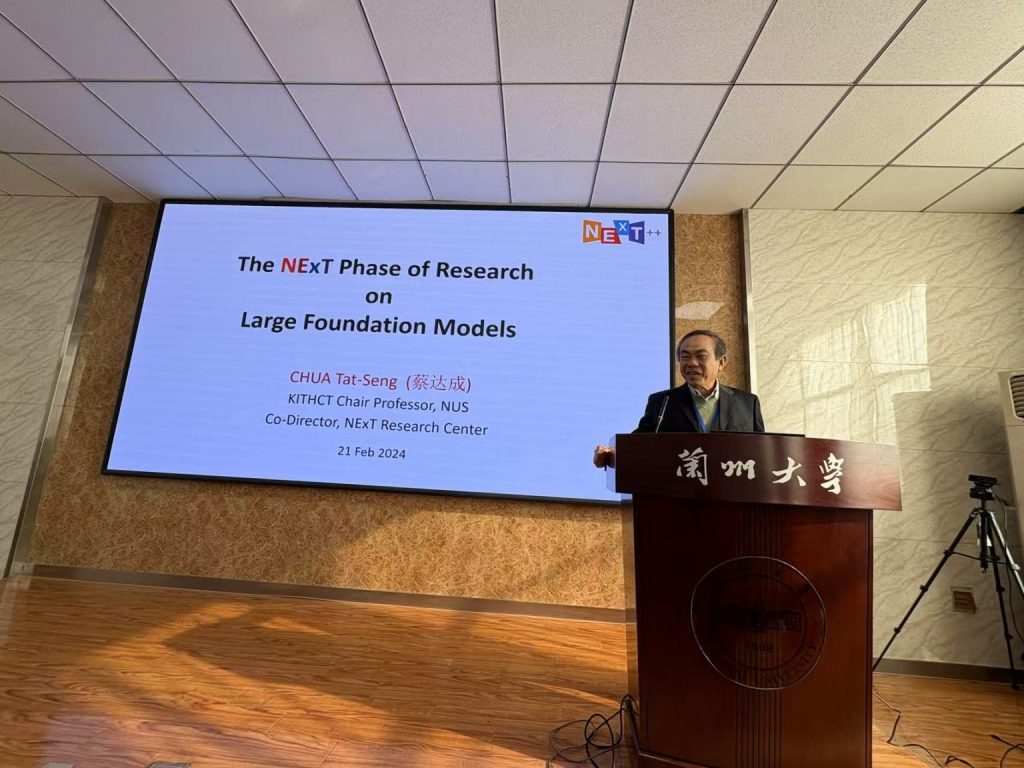
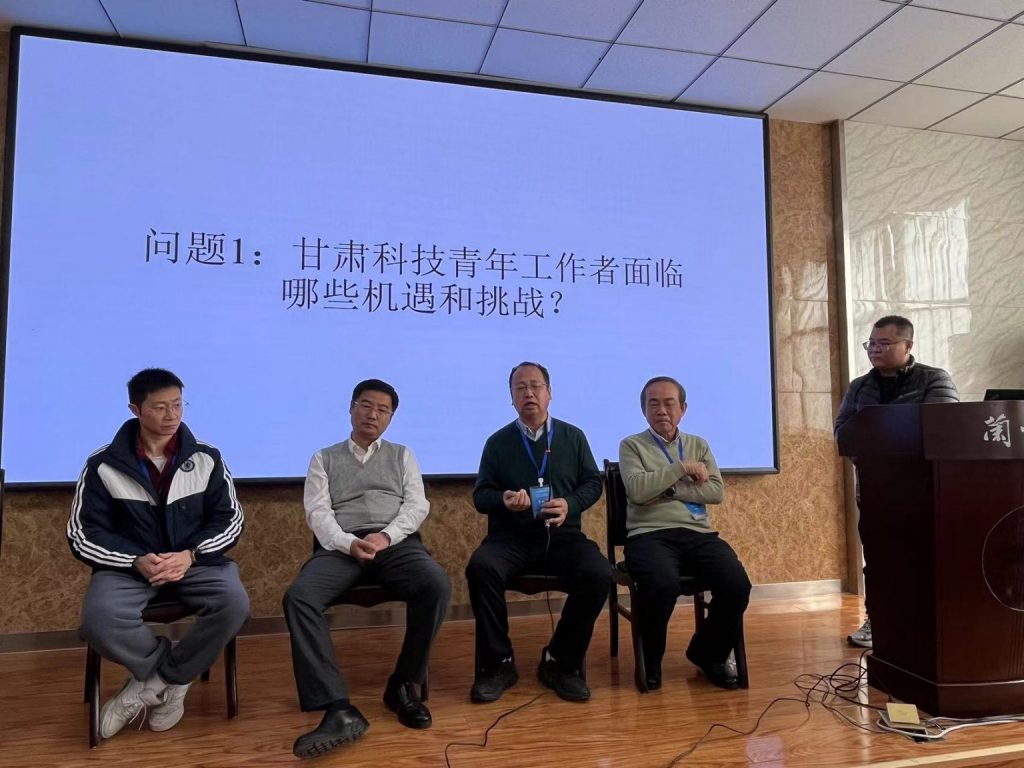
The conference was chaired by Professor Bin Hu from the School of Information Science and Engineering of Lanzhou University. Professor Tat-Seng Chua delivered a keynote speech titled The Next Phase of Research on Large Language Foundation Models. Professor Chua reviewed the evolution of artificial intelligence technology, analyzed the groundbreaking impacts of models such as ChatGPT and DeepSeek, and looked ahead to the development direction of AI driven by multimodality and intelligent agents. He pointed out that current AI has entered a new phase of multimodal and agent collaboration. Although large foundation model (LFM) technologies represented by ChatGPT and DeepSeek have driven leaps in content generation and reasoning capabilities, the accompanying trust crises, algorithmic biases, and security vulnerabilities urgently need to be addressed. Professor Chua emphasized in particular: “Building a robust artificial intelligence framework requires close collaboration between academia and industry, with comprehensive breakthroughs in data governance, ethical norms, and technological transparency.” He proposed that the next phase of research should shift from “capability-first” to “responsibility-first”, constructing an interpretable, traceable, and controllable foundation model framework. In addition, Professor Chua shared the latest achievements of the NExT Center, jointly established by the National University of Singapore and Tsinghua University, in the field of multimodal data analysis, sparking enthusiastic discussions among participating scholars. Dr. Jisheng Dang chaired the roundtable forum themed How Can Young Faculty Members Achieve Rapid Growth?, which conducted in-depth discussions on topics such as how young scholars select research directions, and the opportunities and challenges faced by young scientific and technological workers in Gansu. Professor Tat-Seng Chua suggested that young scholars should choose appropriate fields for in-depth research; Professor Ke Lü emphasized the importance of diligence, collaboration, and sincere work; Professor Jinhui Tang pointed out that selecting a platform and team suitable for oneself is crucial for the growth of young scholars; Professor Weishi Zheng encouraged everyone to conduct research that they are interested in and that possesses uniqueness. The forum was held in a lively atmosphere, and the profound insights of experts and scholars provided valuable experience and guidance for young scholars. Through this conference, scholars at home and abroad conducted in-depth exchanges on the latest research achievements in the field of artificial intelligence and discussed future development directions, injecting new impetus into the sustainable development of artificial intelligence in China. This conference is not only a platform for academic exchanges, but also a catalyst for technology implementation and regional development. Relying on its hub position in western China, Lanzhou University is actively promoting the application of artificial intelligence from industry to people’s livelihood, supporting scientific and technological innovation and economic development in western China.