
The 16th Interdisciplinary Forum of Lanzhou University—Academic Forum on Symposium on Affective Computing and Digital Mental Health & IEEE Editors’ Forum—Was Held
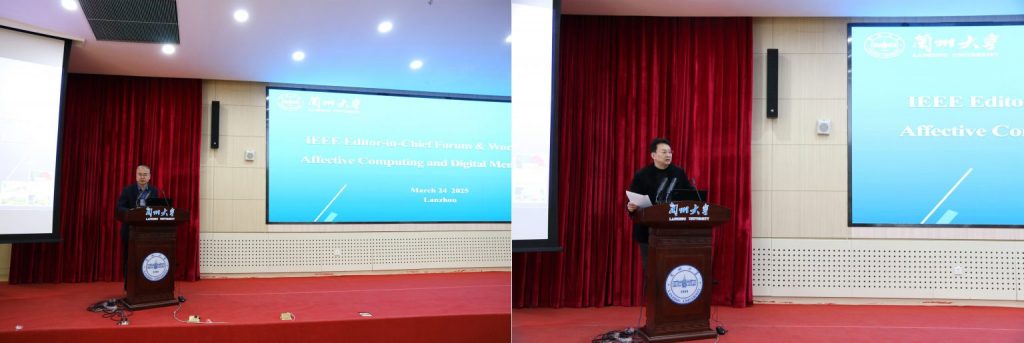
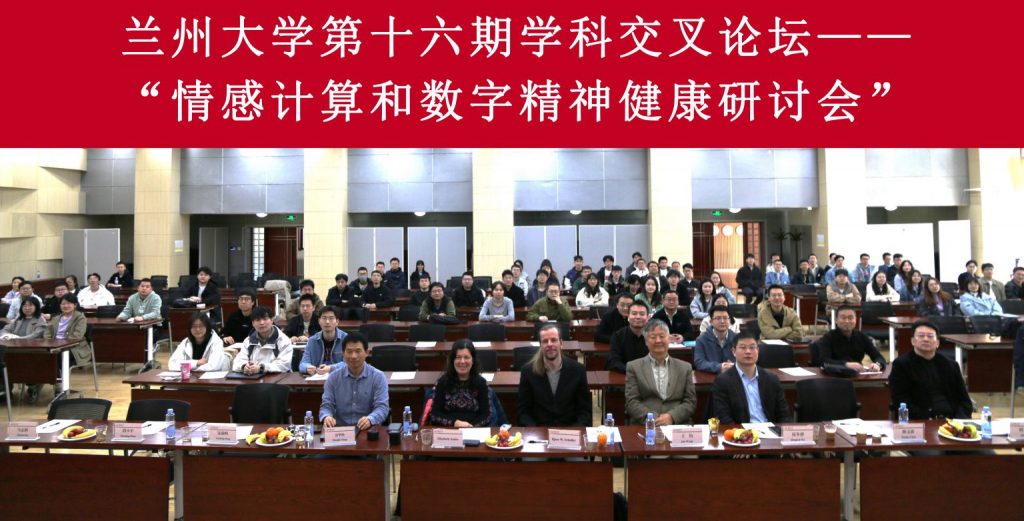
From March 23rd to 24th, 2025, the 16th Interdisciplinary Forum of Lanzhou University—Academic Forum on Symposium on Affective Computing and Digital Mental Health & IEEE Editors’ Forum was held at Chengguan Campus. The forum was hosted by Lanzhou University and organized by the School of Information Science and Engineering, School of Basic Medical Sciences, and Research Institute of Science and Technology Development of Lanzhou University. Wenbo Chen, Secretary of the Party Committee and Executive Vice Dean of the School of Information Science and Engineering of Lanzhou University, attended the opening ceremony and delivered a speech. Present at the opening ceremony were leaders, experts and scholars, including Xiaoping Duan, Deputy Secretary of the Party Committee of the School of Information Science and Engineering of Lanzhou University; Bin Hu from the School of Information Science and Engineering of Lanzhou University; Professor Yanfeng Song from the School of Basic Medical Sciences of Lanzhou University; Professor Bjoern W. Schuller from Imperial College London, UK; Professor Elisabeth Andre from the University of Augsburg, Germany; Professor Jun Wang from City University of Hong Kong; Professor Huajin Tang from Zhejiang University; Professor Dongrui Wu from Huazhong University of Science and Technology; and Professor Kun Qian from Beijing Institute of Technology. The forum was chaired by Professor Bin Hu.
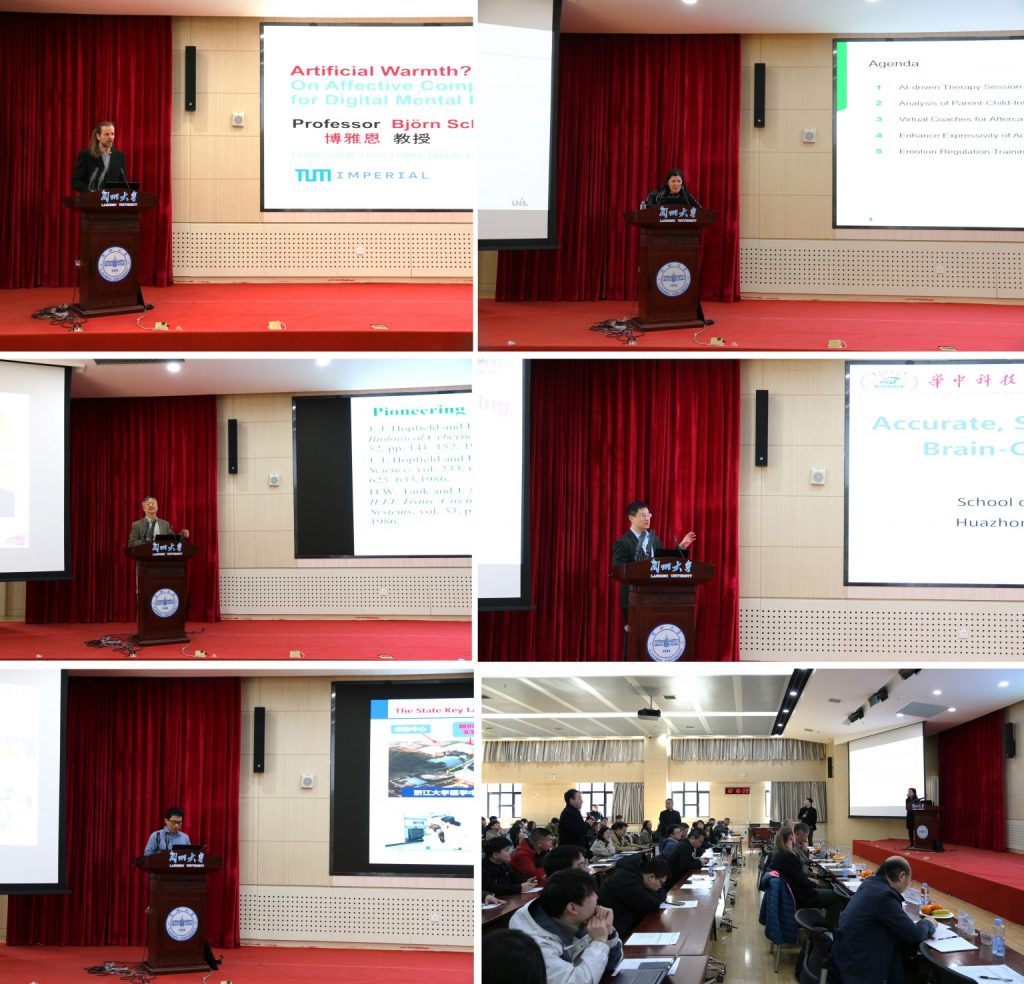
This forum, themed “Affective Computing and Digital Mental Health”, invited a number of experts in the field of affective computing to jointly explore cutting-edge issues at the intersection of affective computing, mental health, and artificial intelligence. Professor Bjoern W. Schuller delivered a keynote speech titled Artificial Warmth? On Affective Computing for Digital Mental Health. He presented in depth the innovative applications of artificial intelligence technologies such as transfer learning, self-supervised learning, and reinforcement learning in feature extraction and modeling of emotional information including speech, facial expressions, micro-gestures, and electroencephalogram (EEG) signals, as well as the progress of large language models and multimodal analysis methods in improving the accuracy of affective computing. In addition, he looked ahead to the application of breakthrough technologies such as quantum computing in the field of affective computing, and emphasized the construction of ethical norms in affective computing. Professor Elisabeth Andre gave a keynote speech entitled Beyond Diagnostics: How Affective Computing Advances Psychological Research and Mental Health Interventions. She pointed out that affective computing is reshaping mental health care by enhancing emotional understanding and supporting treatment processes. She shared several application cases of affective computing: a new paradigm of psychotherapy based on artificial intelligence technologies such as the NOVA tool and large language models; a research method that uses multimodal AI strategies to significantly improve the accuracy of dynamic behavior classification in infants; and the practice of affective computing in key areas such as psychological intervention for vulnerable groups and augmentative and alternative communication technologies. Professor Jun Wang delivered a keynote speech titled Advances in Collaborative Neurodynamic Optimization. He pointed out that collaborative neurodynamic optimization is a hybrid intelligent framework that combines neurodynamic optimization with swarm intelligence optimization algorithms. In this framework, multiple neurodynamic optimization models with diversified initial states are used in parallel for decentralized local search, and meta-heuristic rules are applied to reposition neuron states when local convergence is achieved, so as to avoid local minima and move toward global optimal solutions. In addition, through typical application scenarios such as feature selection and distributed portfolio optimization, he empirically demonstrated the effectiveness of this method, providing new ideas for solving complex optimization problems. Professor Dongrui Wu presented a keynote speech named Accurate, Secure and Privacy-Preserving Brain-Computer Interfaces. He conducted an in-depth explanation and discussion on the problems of accuracy, security, and privacy protection encountered in brain-computer interface (BCI) research, shared his team’s latest research progress, and elaborated on the practical application of data alignment-related technologies. Professor Huajin Tang gave a keynote speech titled Brain-inspired Computing Models and Methods: Simulating Biological Intelligence. He elaborated on important information processing mechanisms and computing architectures in neuroscience, explored theories and methods for realizing brain-inspired high-efficiency and intelligent computing—including spiking neural network models and learning algorithms—and demonstrated the application practices of brain-inspired algorithms. During the interactive Q&A session, the participating faculty and students engaged in lively discussions with the experts based on the content of the reports, creating a strong academic atmosphere on site.
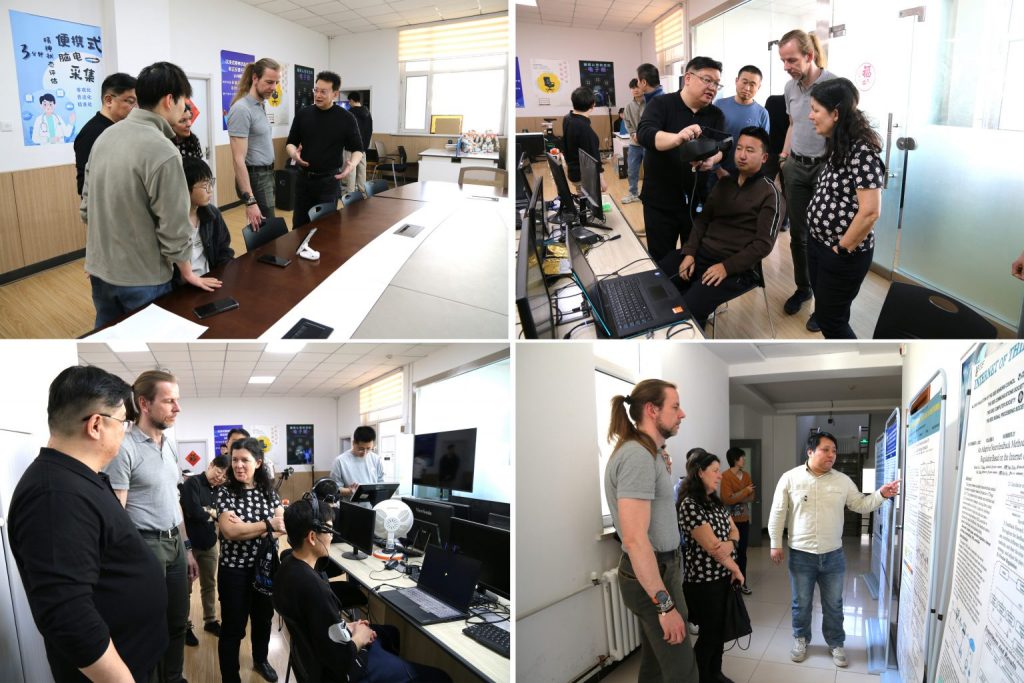
During the forum, experts and scholars visited the Gansu Key Laboratory of Wearable Devices. The team demonstrated a number of innovative achievements on site, including a 3-channel EEG depression assessment system, an intelligent wearable eye tracker, and a VR bicycle feedback training system. Experts and scholars conducted in-depth exchanges with the faculty and students of the laboratory regarding technical details and application scenarios. In addition, faculty and students of Lanzhou University engaged in relevant research fields presented their latest research findings in academic posters, and conducted in-depth discussions with the experts and scholars.
This forum systematically showcased the cutting-edge research achievements in the interdisciplinary field of affective computing, mental health and artificial intelligence, promoted the innovation of interdisciplinary methodologies, and effectively advanced the collaborative development of cross-disciplinary studies. It not only built an academic platform for in-depth dialogues among experts and scholars, but also established a growth platform for young researchers to obtain academic guidance, facilitating the cultivation and development of young talents.