The UAIS La Published a Mental Disorder Dataset in Scientific Data, a Sub-journal of Nature
Recently, the UAIS Lab has published a multimodal dataset for mental disorder analysis. The related research findings, titled “A multi-modal open dataset for mental-disorder analysis”, were published online in Scientific Data, a sub-journal of Nature, in April 2022. Professor Bin Hu and Yumin Li from the School of Medicine, Lanzhou University, served as the corresponding authors, while Associate Professor Hanshu Cai was the first author of the paper.
Background of the Dataset
In recent years, due to the increasing life pressure and lack of psychological counseling, the number of people with mental disorders, especially depression, has shown a remarkable increase. According to a report by the World Health Organization (WHO), 264 million people worldwide suffered from depression in 2020. Moreover, the WHO predicts that depression will become the leading cause of the global disease burden by 2030. China has clearly stated in the Healthy China 2030 Planning Outline that “it is necessary to strengthen interventions for common mental disorders such as depression and anxiety disorders, as well as psychological and behavioral problems”. At present, the diagnosis of depression and other mental disorders is mainly completed based on interviews conducted by professionals and evaluations using clinical scales. Subjective diagnosis by doctors and subsequent treatments are often limited in terms of efficiency and accuracy. With the rapid development of artificial intelligence technology, the use of physiological signals for assessment is conducive to the objective, rapid and efficient early diagnosis of depression and other mental disorders, ensuring that patients can receive timely and effective clinical treatment.
Dataset Introduction
The Modma Dataset is a multimodal dataset released by the UAIS Laboratory for mental disorder analysis, which provides new ideas and methods for the diagnosis and treatment of mental disorders. The subjects of the dataset include clinically diagnosed depression patients (identified and selected by psychiatrists in hospitals) and a control group of healthy individuals. The dataset consists of three parts: 128-channel electroencephalogram (EEG) experimental data, wearable 3-channel EEG experimental data, and speech experimental data. Specifically, it includes:
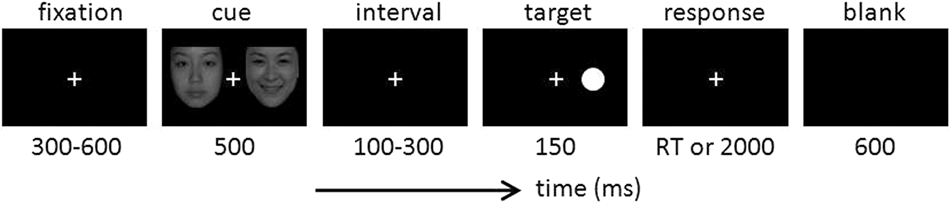
- 128-channel EEG signals recorded under resting state and during the Dot Probe task (from 53 subjects)
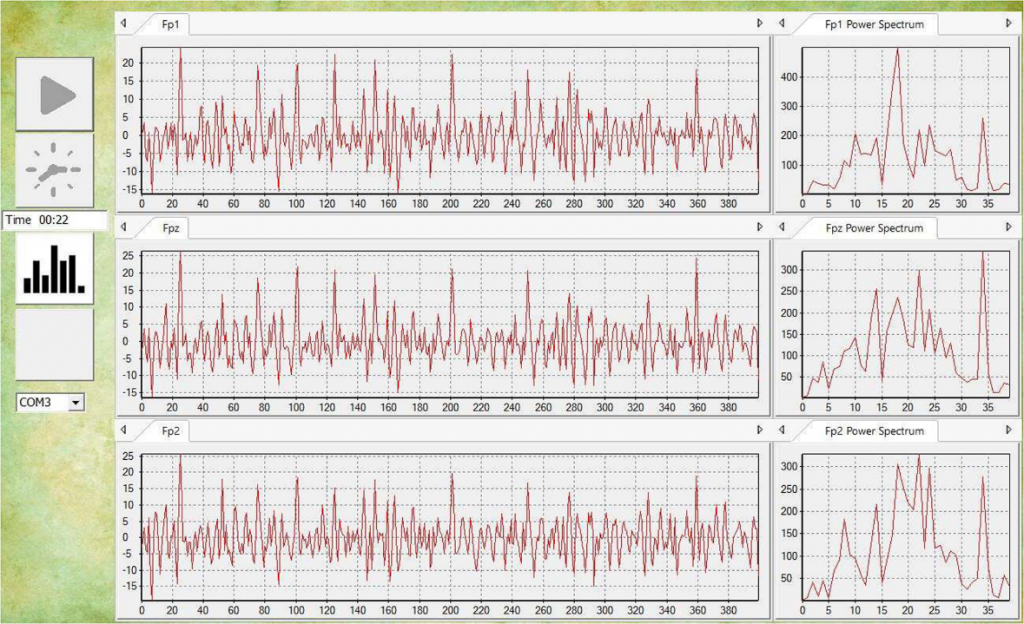
- 3-channel EEG signals recorded under resting state (from 55 subjects)
- Audio signals recorded during interviews, reading tasks and image viewing (from 52 subjects)
To date, 479 individuals have applied to download the dataset, among whom 338 have passed the review and obtained access permission.